
"Island Garden"
700 article(s) found

Flavor and taste characteristics of coffee manor in Ecuador introduction to Hasunda Coffee Garden
Flavor: balanced acidity, aromatic fragrance recommended roasting methods: medium to deep roasting, can be made into high-quality mixed coffee, suitable for multi-use evaluation: general Ecuadorian giant turtle island coffee beans from the hometown of giant turtles coffee treasures the best Ecuadorian coffee is grown on St. Cristobal Island in the Galapagos Islands, where it has the best quality coffee in the world.

Introduction of Ecuadorian Coffee Flavor Hasunda Coffee Garden in Ecuador Coffee producing area
St. Cristobal is a larger island in the Galapagos archipelago. At 410m above sea level, there is a small lake called El.Junco, which forms streams along the rocks and volcanic rocks on the southern slope of the island. Mineral-rich fresh water moistens the land of St. Cristobal, keeping the soil moist and fertile. For here.

Description of Coffee Flavor in Hasunda Coffee Garden in Ecuador
Between Colombia and Peru, Ecuador, which passes through the equator, is one of the few countries in South America that produces both Arabica and robastian coffee. In fact, Ecuador means the Spanish equator. Due to the use of old-fashioned traditional harvesting and handling methods, Ecuadorian coffee is not listed as a boutique coffee, so it is generally rarely seen.

Ecuadorian coffee producing area Galapagos Coffee San Cristobal Hasunda Coffee Garden
The best Ecuadorian coffee from the hometown of the giant tortoise is grown on St. Cristobal Island in the Galapagos Islands, which has the natural geographical conditions unique to giving birth to the best quality coffee in the world. A cup of Galapagos coffee, like the beautiful scenery of the Galapagos Islands, is sure to impress you. In the mid-15th century, in western South America

Introduction of Coffee Flavor and Taste varieties in Hassanda Coffee Garden, Ecuador
As coffee is consumed by people all over the world, the world coffee industry is also moving towards mass production, while St. Cristobal, a small and unreliable coffee industry, is in trouble and is likely to be forced to give up without profit. It wasn't until the early 1990s that the Gonzalez family bought Hasunda Coffee Park. Humboldt current (HumboldtC
The scenery of Hainan Coffee Garden is charming.
White jade carved green leaves, coral beads United, braving the rain to see the coffee, lingering can not bear to return. The flowers often bring rain, and the smell is as strong as milk. The mountain birds call at night and pick up fallen pearls in the Ming Dynasty. This is a "Bodhisattva Man" depicting the coffee garden. Anyone who has been to the coffee garden will applaud the author's poem. The scenery of the coffee garden on Hainan Island is charming, and the coffee produced in Hainan Island is also fragrant.

Ecuador Hassanda Coffee Garden Ecuador Coffee Bean Flavor Manor
Ecuador is one of the few countries in South America that produces both Arabica and Robbins. However, as the land suitable for Arabica coffee trees is decreasing, the production of Robbins coffee is gradually increasing. The best Arabica coffee comes from the Andes, especially the Chanchagu Valley (Chanchamgo Valley), which is divided into two mountains from the south.

Flavor description of Hasunda Coffee Garden in Ecuador introduction to the taste manor of variety producing areas
In 1535, Flatoma de Belanga and others of Spain stumbled upon the Galapagos Islands. Thomas was born in 1487 on the Duro River in the province of Soria, Spain. He was the fourth bishop of Panama at that time. He was ordered to go to Peru. When his ship set sail from Panama on February 23, under the impact of a strong current, they were taken to the unknown surface of the ocean.

Flavor and taste characteristics of Ecuadorian coffee manor introduction to Hasunda Coffee Garden
In the mid-15th century, there were legends about enchanted mysterious islands among fishermen fishing in the western Pacific Ocean of South America. It is said that the islands can sometimes be seen clearly from a distance, but when the ship approaches, it disappears again; sometimes it looks like a galleon, sometimes it shows the shape of a witch. The fishermen called these islands Magic Island and thought it was there.
Fragrant Hassanda Coffee Garden in Ecuador Origin and Development of Fine Coffee History and Culture
In the mid-15th century, there were legends about enchanted mysterious islands among fishermen fishing in the western Pacific Ocean of South America. It is said that the islands can sometimes be seen clearly from a distance, but when the ship approaches, it disappears again; sometimes it looks like a galleon, sometimes it shows the shape of a witch. The fishermen called these islands Magic Island and thought it was there.

An introduction to the coffee flavor and taste producing area of Hassanda Coffee Garden in Ecuador from the hometown of the tortoise.
As coffee is consumed by people all over the world, the world coffee industry is also moving towards mass production, while St. Cristobal, a small and unreliable coffee industry, is in trouble and is likely to be forced to give up without profit. It wasn't until the early 1990s that the Gonzalez family bought Hasunda Coffee Park. Humboldt current (HumboldtC

Those expensive and unpopular coffee
Coffee name: St. Helena Origin: British St. Helena Island (Saint Helena Island, the claustrophobic island where Napoleon was exiled) Farm: Napoleon Farm Variety: Bourbon Coffee name: blue Elise (Elise Blue) Origin: French New Caledonia (New Caledonia Island) Farm: Caf Kuandji Farm products

Ecuadorian Coffee Flavor and Taste Manor introduction to the characteristics of Ecuadorian coffee beans in Hasunda Coffee Garden
In the mid-15th century, there were legends about enchanted mysterious islands among fishermen fishing in the western Pacific Ocean of South America. It is said that the islands can sometimes be seen clearly from a distance, but when the ship approaches, it disappears again; sometimes it looks like a galleon, sometimes it shows the shape of a witch. The fishermen called these islands Magic Island and thought it was there.

Indonesian East Java Coffee| Java Smallholder Garden| wet planing
Coffee Workshop (Weixin Official Accounts cafe_style) East Java-smallholder garden Variety: S795 (Typica hybrid arabica) Tibika-mixed Arabica Producer: Independent coffee smallholder in East Java Elevation: 900-1600m Treatment: wet planing Most Java coffee is produced by the Indonesian government

Flavor description characteristics of moderate mellow Hasunda Coffee Garden in Ecuador introduction to the taste of fine coffee beans
The minerals are mainly oil, mainly distributed in Guayaquil Bay, and oil fields are also found in the Amazon Plain. Gold and silver are distributed in Machaki and Saluma and other places. Copper is made in Machaki. There are sulfur mines in the Cologne Islands. In addition, there is iron, lead and so on. The forest area accounts for about 68% of the country's area, mostly in the eastern region, rich in valuable wood, such as mahogany and ointment.
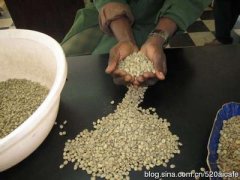
A brief introduction to the taste of high-quality coffee beans in the flavor description of the moderately mellow Hassanda coffee garden in Ecuador
As early as the 18th century, Chinese clothing, textiles and other goods were shipped to Ecuadorian cities through Guayaquil. In August 1978, the Chinese cargo ship Jialing Jiang arrived here for the first time. Most of the import and export goods of the two countries are transported through Guayaquil, mainly oil, mainly distributed in the Guayaquil Bay, and oil fields are also found in the Amazon plain. Gold and silver are distributed in

The unique aroma of Hasenda Coffee Garden Coffee Flavor Taste Introduction
Ecuador is the world's highest arabica coffee plantation. Since the coffee tree was first introduced to Ecuador in 1875, the quality of its coffee has remained unchanged for 100 years, especially the coffee harvested in early June every year, which is known as the best coffee in the world. Ecuadorian coffee beans are divided into two varieties, Galapagos and Higante, which are relatively large particles and heavy weight

Introduction to coffee flavor and taste of coffee producing area in Hasunda Coffee Garden, Ecuador
Located in the middle of the Pacific Ocean, the Cologne Islands (Galapagos Islands) is more than 900km east from the continental coast and covers an area of 7800 square kilometers, including 7 large islands and about 70 small islands, all of which are composed of volcanic cones and volcanic lava, mainly in the Guayaquil Bay. Oil fields are also found in the Amazon plain. Gold and silver are distributed in Machaki and Saluma and other places.

An introduction to the unique flavor of Ecuador's Hassanda Coffee Garden.
Port Guayaquil is the largest seaport in Ecuador. It faces the Pacific Ocean and backs against Mount Santa Ana. The nearby island of Pune serves as a natural barrier to protect the harbour from storms. There is a wharf in the south, which is more than 900 meters long. Ships from different parts of the world flying various flags are moored in the harbor. The port railway leads to the capital Quito, and highways connect Quito with other cities in the country.

Fragrant Ecuadorian Coffee Manor Flavor and Taste characteristics of Hassanda Coffee Garden
In the mid-15th century, there were legends about enchanted mysterious islands among fishermen fishing in the western Pacific Ocean of South America. It is said that the islands can sometimes be seen clearly from a distance, but when the ship approaches, it disappears again; sometimes it looks like a galleon, sometimes it shows the shape of a witch. The fishermen called these islands Magic Island and thought it was there.